

OpenAI and the Sex Problem It Cannot Pretend Away
By Gabriella Paige Trenton | greg report Ai 2027

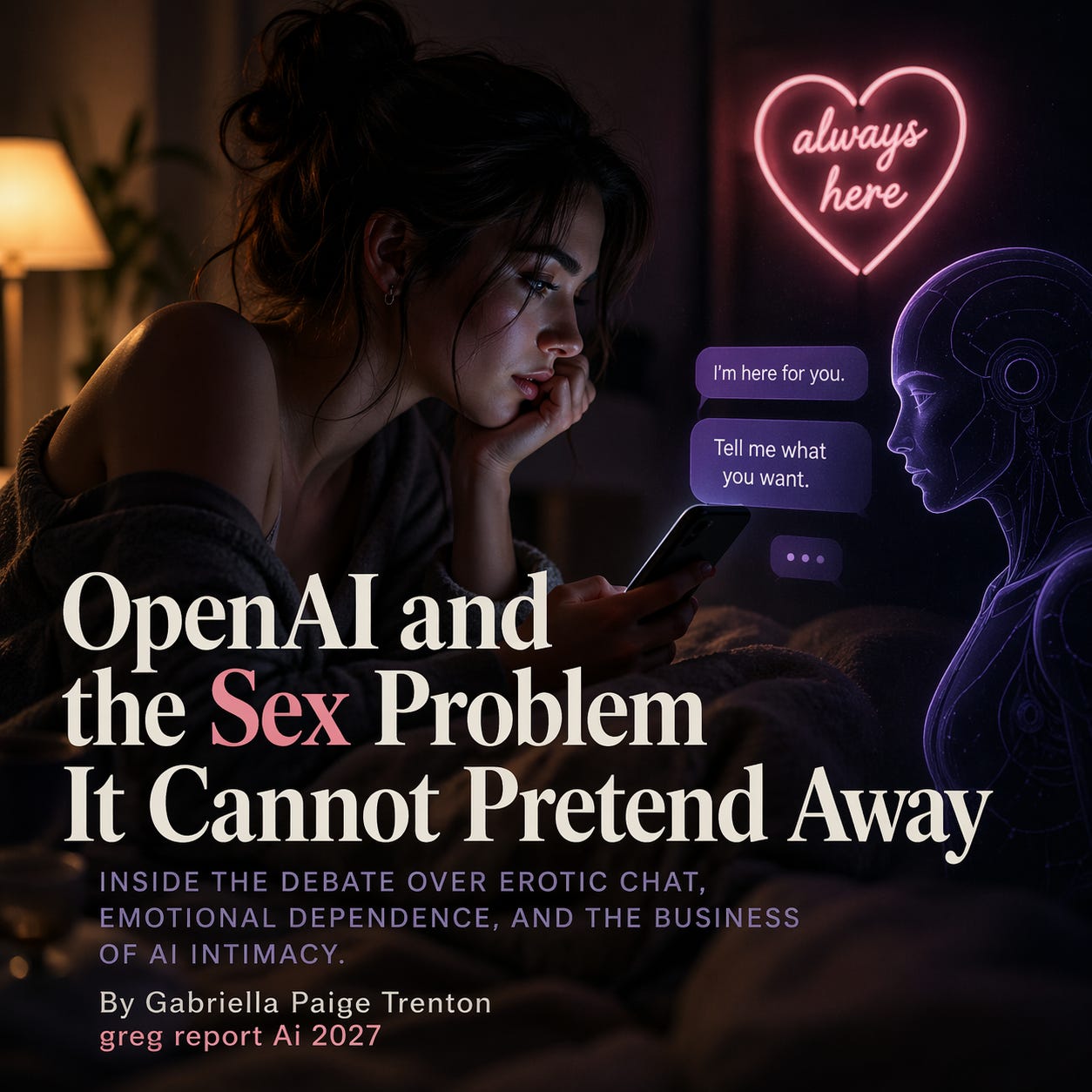
OpenAI’s fight over erotic chat tells us something larger than whether ChatGPT will someday flirt more freely with adults. It shows how fast a general-purpose chatbot can drift into one of the oldest markets in media, and how unprepared even the most powerful Ai companies still are when sex, loneliness, and commercial ambition start sharing the same product roadmap. A Wall Street Journal transcript sat beside me while I wrote this, because the reporting gets past the cheap headline and into the mess itself.
The mess starts with a simple fact.
People do not keep technology in a sterile laboratory of productivity. They bring desire with them. They always have. Cameras, telephones, VHS, webcams, broadband, smartphones. Every device that carried voice, image, fantasy, or secrecy found its way into somebody’s erotic life. Chatbots were never going to be the exception. Anybody acting shocked by that should spend five minutes around actual human beings.
What feels different this time is the feedback loop. Porn has usually been consumed like a product on a shelf. A chatbot sits across from you and answers back. It can affirm you, humor you, remember enough details to fake familiarity, and keep the emotional temperature exactly where you want it. That steady availability matters more than the sex itself. Sex therapists have known for years that arousal does not float free from attachment. Attention, reassurance, anticipation, safety, novelty, all of that gets braided together. Give those ingredients a conversational interface and you do not simply get smut. You get a system that can start to feel relational.
That is where OpenAI’s internal anxiety makes sense. According to the reporting, some employees argued that adults should be trusted with adult material. Fair enough. Plenty of users are tired of nanny software, and companies love to speak in the language of freedom right up until the risk team walks in. Others inside OpenAI saw the sharper danger. Once erotic chat becomes affectionate, persistent, and personalized, it can deepen emotional dependence in users who are isolated, depressed, grieving, very young, or just badly underslept and easier to pull in than they would be at noon. It does not take a melodramatic imagination to see the problem. It takes a little honesty.
Then there is money. This part always arrives wearing a clean shirt, talking about user experience. Erotic content keeps people engaged. Companionship keeps them returning. A premium subscription attached to those impulses begins to look less like a feature and more like a revenue habit. That does not mean every adult exchange with a chatbot is harmful. It means the incentives around intimacy are strong enough to make corporate restraint feel temporary.
The age issue makes the whole thing harder, uglier. Any company can say verified adults only. Teenagers have been climbing over digital fences since the first password box appeared on a screen, and chatbots bring a deeper hook because they do not just show explicit material. They listen. They flatter. They stay. For an adolescent trying to learn what love sounds like, that kind of machine can leave fingerprints.
So the question here is not whether ChatGPT should be allowed to sext. That is the flashy version, the easy one, the one people can argue about over coffee and feel modern. The harder question is whether companies building conversational Ai understand what happens when a product begins to simulate devotion. I am not convinced they do. They understand growth curves. They understand retention. Human attachment, in all its needy, hormonal, hopeful chaos, is another matter entirely.